

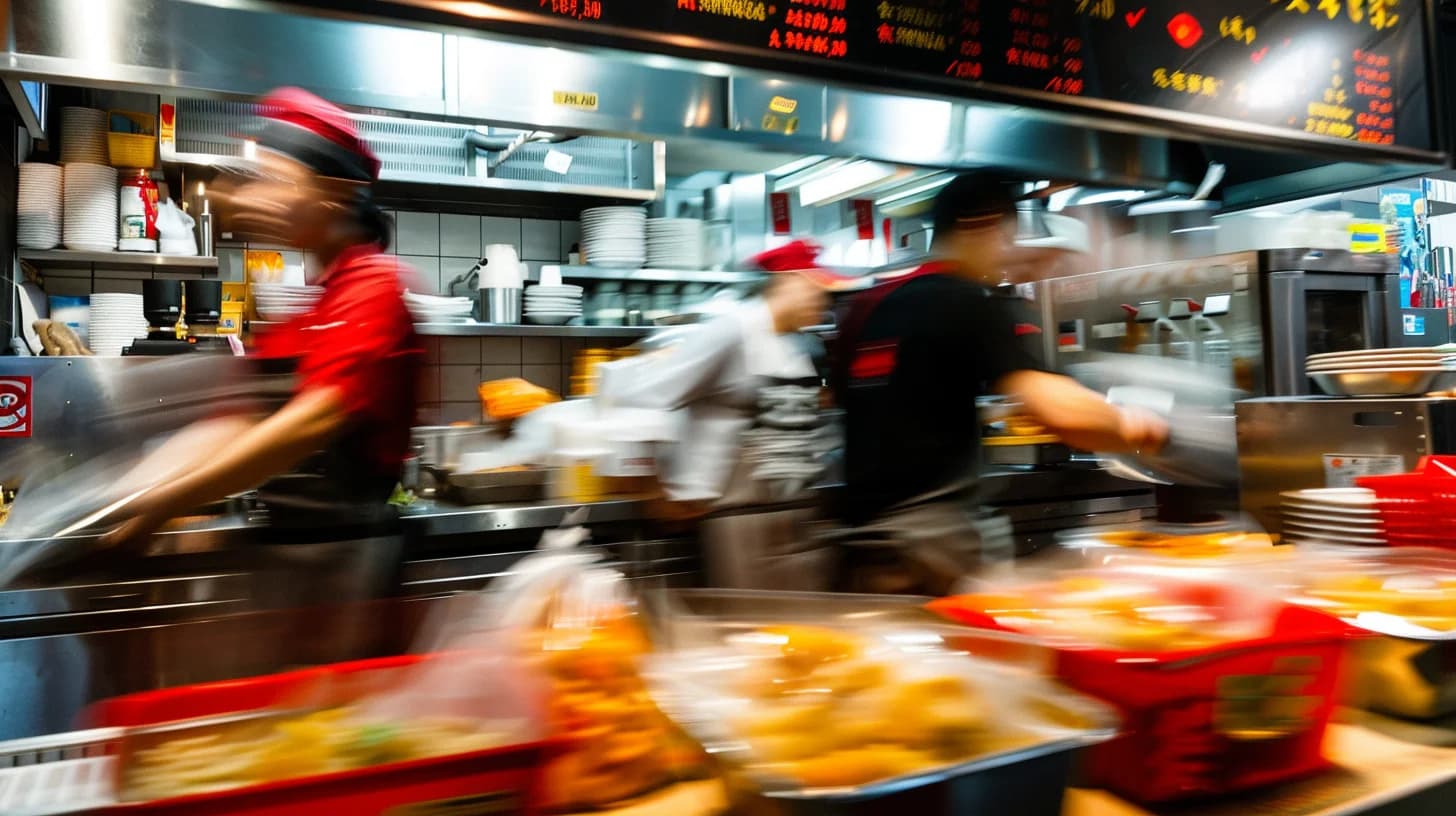
QSR Operations Guide: Managing High-Volume Orders in Southeast Asia
Quick-service restaurants (QSRs) operate on a razor-thin edge. With profit margins typically ranging between 6% and 9%, every operational decision can make the difference between thriving and merely surviving. In Southeast Asia's rapidly growing QSR market—now valued at over $95 billion and expanding at 5.5% annually—operators face unique challenges that demand precision, speed, and smart technology.
The QSR Challenge: High Volume, Low Margins
Unlike full-service restaurants, QSRs succeed through volume efficiency, not premium pricing. The math is unforgiving:
- Labor costs are rising across APAC due to minimum wage increases
- Real estate expenses in prime locations continue climbing
- Raw material costs fluctuate with supply chain volatility
- Platform commissions of 20-35% per order eat into already thin margins
This margin compression forces QSR operators to do more with less—more orders, faster turnover, fewer errors, and leaner staffing.
The Multi-Platform Delivery Dilemma
Today's QSR customers expect to find their favorite brands on GrabFood, Foodpanda, GoFood, ShopeeFood, and increasingly, TikTok Shop. The average Southeast Asian QSR now maintains 3-4 active delivery platforms simultaneously.
The Hidden Costs of Multiple Tablets
Managing each platform through separate devices creates operational chaos:
- Staff confusion — Crew members bounce between tablets, increasing order errors
- Delayed response times — Manual order entry from tablets to kitchen creates bottlenecks
- Menu inconsistency — Price and availability mismatches across platforms frustrate customers
- Reporting fragmentation — No unified view of sales performance across channels
The Speed Imperative
QSR customers expect their food in minutes, not hours. When a GrabFood order, a Foodpanda pickup, and a walk-in customer all arrive within the same 5-minute window, your kitchen must execute flawlessly. Any delay ripples through the queue, creating a cascade of late orders and negative reviews.
Operational Best Practices for APAC QSRs
1. Implement Order Aggregation
The single most impactful operational change a QSR can make is consolidating all delivery platforms into a single management system. Instead of managing 3-4 tablets, your staff works from one interface that:
- Receives all orders in real-time
- Automatically routes orders to kitchen display systems
- Synchronizes menu availability across platforms
- Provides unified reporting and analytics
2. Optimize Your Menu for Delivery
Not every menu item travels well. Successful QSRs create delivery-optimized menus that:
- Exclude items that do not hold temperature during transport
- Bundle high-margin add-ons (drinks, sides) into combo meals
- Use dynamic pricing to manage demand during peak hours
- Clearly mark preparation times so platforms can set accurate ETAs
3. Design for Throughput
Your physical layout directly impacts order speed:
- Separate pickup counters for delivery riders vs. walk-in customers
- Dedicated packaging stations to prevent kitchen bottlenecks
- Hot-holding equipment positioned for immediate order assembly
- Clear rider staging areas that do not block customer flow
4. Master Peak Hour Management
Lunch rushes (11:30-13:30) and dinner peaks (18:00-20:00) define QSR profitability. Top operators:
- Pre-stage ingredients before peak hours
- Cross-train staff for flexibility during demand spikes
- Use predictive prep based on historical data
- Implement dynamic pricing to smooth demand curves
5. Monitor Platform Performance
Not all delivery platforms perform equally. Track:
- Order volume by platform and time of day
- Average ticket size across channels
- Commission costs as percentage of gross sales
- Customer acquisition cost per platform
- Cancellation and error rates by channel
Use this data to negotiate better terms and allocate inventory strategically.
Technology Solutions for Modern QSRs
Kitchen Display Systems (KDS)
Replace printed tickets with digital displays that:
- Show order priority based on promised delivery time
- Color-code orders by platform and urgency
- Track prep times to identify bottlenecks
- Integrate with order aggregation platforms
Inventory Management Integration
Link your POS to inventory systems to:
- Automatically 86 items when stock runs low
- Sync availability across all platforms instantly
- Predict demand based on historical patterns
- Reduce waste through better forecasting
Centralized Analytics
A unified dashboard helps you understand:
- Which menu items drive the most profit by channel
- When to staff up or down based on predicted volume
- How promotions perform across different platforms
- Where operational improvements will have the biggest impact
How klikit Supports QSR Operations
klikit is built specifically for high-volume, multi-platform operators in Southeast Asia. Our platform addresses the core QSR challenges:
Order Aggregation
Consolidate GrabFood, Foodpanda, GoFood, ShopeeFood, and other platforms into a single interface. Orders flow directly to your kitchen display system without manual entry.
Real-Time Menu Sync
Update prices, availability, and descriptions across all platforms from one dashboard. When you 86 an item, it disappears everywhere instantly—no more angry customers ordering unavailable products.
Operational Analytics
See consolidated performance across all channels. Understand which platforms deliver the best customers, which menu items have the highest margins by channel, and where to focus your marketing spend.
Multi-Location Management
For QSR chains, manage menus, pricing, and reporting across all locations from headquarters while maintaining local flexibility for each store.
The Bottom Line
QSR success in Southeast Asia comes down to operational excellence at scale. With margins of 6-9%, there is no room for inefficiency. Every manual process, every tablet-switching delay, every order error directly impacts profitability.
The operators winning in this market have invested in technology that:
- Eliminates manual work
- Reduces order errors
- Speeds up kitchen throughput
- Provides visibility across all channels
In a market growing at 5.5% annually with increasing competition, operational efficiency is not just an advantage—it is survival.