klikitklikit
  • kliklearn
  • 定價
  • 關於
預約演示登入
  1. 首頁
  2. 學習
  3. How to Set Up a Cloud Kitchen in Japan (2026) | Complete Guide
返回學習中心
Guide僅提供英文版

How to Set Up a Cloud Kitchen in Japan (2026) | Complete Guide

Step-by-step guide to launching a cloud kitchen in Japan. Covers licenses, costs, delivery platforms (Uber Eats, Demae-can), equipment, and profitability.

Klikit
2026年9月6日
5 min read
How to Set Up a Cloud Kitchen in Japan (2026) | Complete Guide

How to Set Up a Cloud Kitchen in Japan (2026)

Japan's food delivery market has matured into a permanent fixture of urban life. With Uber Eats and Demae-can (出前館) now serving millions of households across Tokyo, Osaka, and Yokohama, cloud kitchens — also called ghost kitchens or dark kitchens — have become one of the most capital-efficient ways to enter the Japanese F&B market.

Unlike a traditional restaurant that can cost ¥10 million or more to open in Tokyo, a cloud kitchen startup in Japan can launch for as little as ¥2–3 million. You skip the dining room, the front-of-house staff, and the premium retail rent. You focus on what matters: cooking great food and getting it to customers fast.

This guide walks you through every step of launching a cloud kitchen in Japan — from legal requirements to platform selection to profitability — based on 2026 market conditions.

What Is a Cloud Kitchen?

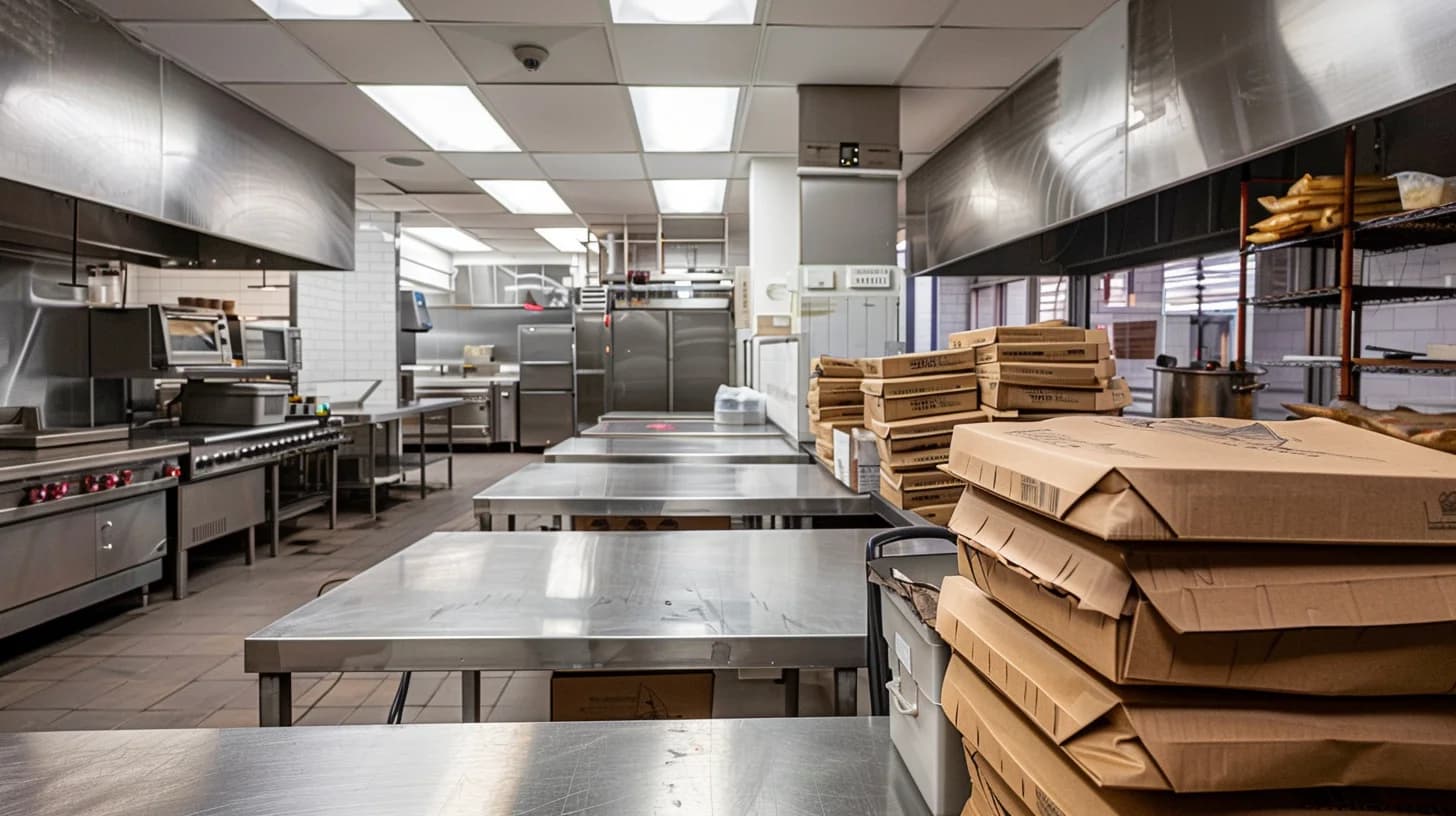
A cloud kitchen is a food preparation facility designed exclusively for delivery orders. There is no dine-in space, no storefront, and no walk-in customers. Orders come in through delivery apps, get prepared in a commercial kitchen, and are handed to delivery riders at a designated pickup station.

In Japan, cloud kitchens are typically:

  • 16–25 square meters — roughly one-tenth the size of a typical dine-in restaurant
  • Located in commercial or industrial zones where rent is 50–70% lower than retail streets
  • Equipped for multiple virtual brands — one kitchen can operate several concepts
  • Staffed by 1–3 people during peak hours, compared to 15–30 for a traditional restaurant

The model is particularly attractive in Japan where labor shortages and high commercial rents in Tokyo and Osaka make traditional expansion risky.

Why Japan Is Ideal for Cloud Kitchens

Several market conditions make Japan a strong environment for cloud kitchen operators:

  • Delivery is now habitual. Japan's online food delivery market reached over ¥800 billion in 2025, and while growth has normalized post-pandemic, order volumes remain 90% above pre-2020 levels.
  • Urban density. Tokyo, Osaka, and Yokohama offer massive customer concentrations within a 3km delivery radius — the sweet spot for delivery platforms.
  • High food standards. Japanese consumers reward consistency and quality. A cloud kitchen with tight operations can build strong ratings faster than a full-service restaurant.
  • Lower regulatory friction than dine-in. No alcohol license, no late-night operating permit, and no customer parking requirements.

Step 1: Legal and Regulatory Requirements

Before you lease a kitchen or buy equipment, you need the right permits. Japan's food safety system is strict but straightforward if you prepare in advance.

Restaurant Business Permit (飲食店営業許可)

This is the primary license you need. You must apply at your local public health center (保健所) before opening. An inspector will visit your kitchen to verify:

  • Proper ventilation and exhaust systems
  • Adequate hand-washing stations (separate from dishwashing)
  • Food-grade surfaces and storage
  • Waste disposal compliance
  • Fire safety standards

The 2021 revision of the Food Sanitation Act created 32 licensed business categories, but most cloud kitchens fall under the standard restaurant business permit. Processing typically takes 2–4 weeks after submission.

Licensed Cook Requirement (調理師免許)

Under the Licensed Cooks Act, establishments that prepare and serve food to a large number of people must employ at least one certified cook. For a cloud kitchen, this usually means having one staff member with a 調理師免許 on duty during operating hours. If you are the owner-operator and have completed culinary training, you may qualify yourself.

Business Registration and Tax

You will need to:

  1. Register your business with the Legal Affairs Bureau (either as a corporation or sole proprietorship)
  2. Obtain a corporate seal (hanko) and register it
  3. File for consumption tax (消費税) registration if you expect revenue over ¥10 million in the first year
  4. Open a business bank account — most platforms require this for settlement

Zoning and Fire Safety

Not all commercial spaces can be used for food preparation. Confirm with your landlord that the property is zoned for 飲食店 (restaurant/food business) use. You will also need fire department approval for your ventilation hood and gas lines.

Step 2: Choosing Your Location

Location strategy for cloud kitchens is fundamentally different from dine-in restaurants. You are not optimizing for foot traffic — you are optimizing for delivery coverage and operational efficiency.

Tokyo vs. Osaka vs. Other Cities

CityProsCons
TokyoLargest delivery demand, highest order frequency, most platform coverageHighest rent, fiercest competition
OsakaStrong food culture, lower rent than Tokyo, loyal customer baseSmaller total market, fewer expat customers
YokohamaGrowing demand, proximity to Tokyo, lower costsLess mature delivery market
Fukuoka / SapporoLow rent, emerging markets, less competitionLower order volumes, thinner delivery rider networks

For first-time operators, Tokyo's 23 wards or Osaka's central districts offer the best combination of demand density and delivery infrastructure.

Facility Options

Option A: Cloud Kitchen Provider (Recommended for First-Timers)

Companies like KitchenBASE and CloudKitchens offer turnkey kitchen stations in established delivery zones. These typically include:

  • Commercial-grade ventilation and gas lines
  • Shared cold storage and dry storage
  • Delivery rider pickup stations
  • Existing relationships with delivery platforms

Monthly rent: ¥200,000–¥600,000 depending on size and location. Initial investment: approximately ¥2.3 million.

Option B: Independent Commercial Kitchen

Rent a standalone space in an industrial or commercial building and fit it out yourself. This gives full control but requires higher upfront investment (¥3–6 million for equipment and renovation) and longer setup time.

Option C: Shared Kitchen Space

Some facilities rent by the hour to multiple operators. Best for testing concepts with minimal commitment, but not scalable for high-volume operations.

Rent Structure in Japan

Japanese commercial leases typically require:

  • Shikikin (敷金): Security deposit — usually 6–10 months' rent
  • Reikin (礼金): Key money paid to landlord — typically 1–2 months' rent
  • Agency fee: 1 month's rent

Some cloud kitchen providers offer all-inclusive monthly rates that eliminate these upfront costs — a major advantage for new operators.

Step 3: Essential Equipment

A Japan cloud kitchen needs equipment suited to your menu concept, but every kitchen should have:

Core Equipment

  • Commercial gas range (都市ガス or LPガス depending on building)
  • Refrigeration: Under-counter fridge + upright freezer
  • Exhaust hood — required by law and inspected by fire department
  • Stainless steel prep tables — at least 2 meters of workspace
  • Commercial dishwasher or triple-sink washing station
  • High-speed internet — essential for order tablet connectivity

Delivery-Specific Equipment

  • Order aggregation tablet — consolidates orders from multiple platforms
  • Thermal receipt printer for kitchen tickets
  • Insulated delivery bags and sturdy packaging
  • Label printer for order tagging

Pro tip: Many cloud kitchen providers include basic equipment (hood, gas lines, sinks) in the rent. You only need to bring cooking tools, smallwares, and your POS/tablet setup. This can reduce your equipment spend from ¥3–6 million to under ¥1 million.

Step 4: Delivery Platform Strategy

Platform selection is the single most important revenue decision for a Japan cloud kitchen. As of 2026, the landscape has consolidated significantly.

Platform Overview (2026)

PlatformMarket ShareCommissionBest For
Uber Eats~57%25–35%Urban areas, expats, tourists, English-friendly
Demae-can (出前館)~36%10–20%Japanese customers, cash-on-delivery, older demographics
WoltExited JapanN/AAcquired by DoorDash, shut down March 2026

Uber Eats and Demae-can together account for roughly 93% of Japan's food delivery market. Most successful cloud kitchens launch on both platforms simultaneously.

Uber Eats Japan

Uber Eats dominates Tokyo, Osaka, and Kyoto. Its customer base skews younger and includes a significant foreign resident and tourist population. The platform offers:

  • Widest delivery radius (up to 5km in dense areas)
  • English-language support for operators
  • Promotional tools (buy-one-get-one, free delivery campaigns)
  • Integrated analytics dashboard

The downside: higher commissions (30%+) and strict photo quality requirements for menu items.

Demae-can (出前館)

Japan's oldest delivery service has deep domestic roots. It differentiates with:

  • Lower commissions — often 10–20%, significantly better margins
  • Cash-on-delivery — critical for older Japanese customers who avoid credit cards
  • Phone order support — a channel many Japanese households still prefer
  • Corporate catering partnerships

For Japanese-focused concepts (washoku, ramen, bento), Demae-can often generates higher repeat order rates than Uber Eats.

Multi-Platform Order Management

Running two tablets during lunch rush is chaotic. Orders come in at different times, with different formats, and riders arrive at different pickup windows. The most successful Japan cloud kitchens use an order aggregation system that consolidates Uber Eats and Demae-can into a single kitchen display.

This eliminates:

  • Missed orders from tablet overload
  • Manual order entry errors
  • Inventory desync between platforms
  • Kitchen confusion during peak hours

Step 5: Menu Development for Delivery

Your menu must be engineered for delivery from day one. Japanese customers are unforgiving about food quality upon arrival.

Dishes That Travel Well in Japan

  • Donburi bowls — rice bowls with toppings (gyudon, katsudon, oyakodon)
  • Bento boxes — compartmentalized packaging keeps items separate
  • Ramen — broth and noodles packaged separately; huge delivery demand
  • Curry rice — maintains temperature and texture
  • Karaage (fried chicken) — travels well in vented containers

Dishes to Avoid or Modify

  • Tempura — gets soggy within 10 minutes unless packaged with special vents
  • Sashimi — temperature control is critical; expensive if returned
  • Delicate soufflés or fluffy pancakes — deflate during transport
  • Items requiring on-site assembly — confuses customers and riders

Pricing for Profitability

After platform commissions (averaging 20–30%) and packaging costs, your effective revenue per dish is roughly 60–70% of the menu price. Price accordingly:

  • Target 65% gross margin after food costs
  • Build commission into menu pricing — do not absorb it
  • Use add-ons (extra meat, onsen egg, premium rice) to boost average order value

Step 6: Marketing Your Cloud Kitchen

With no storefront signage, your marketing happens entirely online.

Platform-Level Optimization

Your platform listing is your storefront. Invest in:

  • Professional food photography — Japanese customers decide in 2 seconds based on images
  • Clear, appetizing descriptions in both Japanese and English where appropriate
  • Strategic menu organization — bestsellers at the top, combos and add-ons visible
  • Promotional pricing during launch (¥100-off campaigns drive initial reviews)

Social Media and Retention

  • Instagram — post daily stories of kitchen operations and new menu items
  • LINE Official Account — essential in Japan for direct customer communication and repeat orders
  • Tabelog — some cloud kitchen brands build Tabelog pages for SEO and credibility

Review Management

Your first 20 reviews determine your platform ranking. Personally respond to every review — positive and negative — in Japanese. Platforms reward responsive merchants with better placement.

Step 7: Financial Projections

Here is a realistic monthly breakdown for a single-brand cloud kitchen in Tokyo:

ItemMonthly Cost (¥)
Kitchen rent (all-inclusive)350,000
Platform commissions (avg. 25%)250,000
Ingredients (30% of revenue)300,000
Packaging50,000
Staff (2 part-time cooks)300,000
Utilities and internet40,000
Marketing/promotions50,000
Total Monthly Costs1,340,000
Required Monthly Revenue1,000,000
Monthly Profit (20% margin)~200,000

Break-even timeline: Most Japan cloud kitchens reach profitability within 4–8 months if they maintain 4.2+ star ratings and operate on both major platforms.

Common Mistakes to Avoid

  • Launching on one platform only. You need both Uber Eats and Demae-can to reach 90%+ of the market.
  • Underestimating permit timing. Health center inspections can add 2–4 weeks to your timeline.
  • Ignoring packaging. Japanese customers will downrate you for leaking containers or cold food.
  • Overcomplicating the menu. Start with 8–12 items. Expand after operations are stable.
  • Neglecting cash-on-delivery. Demae-can's COD option reaches customers who don't use credit cards online.

Technology Stack for Japan Cloud Kitchens

The most efficient cloud kitchens in Japan run on a minimal but powerful tech stack:

  1. Order aggregation — one screen for Uber Eats + Demae-can + any future platforms
  2. Kitchen display system (KDS) — digital ticket management instead of paper chaos
  3. Inventory tracking — auto-deduct ingredients per order to prevent stockouts
  4. Analytics dashboard — track which items, platforms, and time slots drive profit

A good POS system designed for Japan's delivery market should handle all four functions natively — ideally with Japanese-language support and integration with local payment methods.

Summary: Your Japan Cloud Kitchen Launch Checklist

  • ☐ Secure Restaurant Business Permit from local health center
  • ☐ Verify licensed cook requirement (調理師免許)
  • ☐ Register business and open corporate bank account
  • ☐ Choose location (Tokyo/Osaka provider kitchen or independent space)
  • ☐ Install core equipment and pass fire safety inspection
  • ☐ Set up Uber Eats merchant account and Demae-can account
  • ☐ Configure order aggregation system
  • ☐ Design 8–12 item delivery-optimized menu
  • ☐ Photograph every dish professionally
  • ☐ Launch with promotional pricing for first 2 weeks
  • ☐ Monitor reviews daily and respond to every customer
  • ☐ Track unit economics weekly and adjust menu/pricing

Japan's delivery market is no longer a pandemic trend — it is a permanent channel. Cloud kitchens that operate with discipline, maintain quality standards, and leverage both major delivery platforms are building sustainable businesses at a fraction of traditional restaurant costs.

Need help managing multiple delivery platforms? Klikit consolidates Uber Eats, Demae-can, and other channels into one tablet — so your kitchen staff can focus on cooking, not juggling devices.

標籤
cloud kitchenjapanghost kitchendeliveryrestaurant startupuber eatsdemae-can

相關文章

Guide5 min

新加坡云厨房:2026完整指南

Guide5 min

2026年日本最佳餐厅POS系统 | Klikit

Guide5 min

TikTok Shop即时配送餐厅:2026完整指南 | Klikit

klikitklikit

一站式餐廳外送管理平台

請求 klikit 的 AI 摘要

ChatGPTClaudeGeminiMeta AI
核心
  • 儀表板
  • 銷售點
  • 菜單
  • 庫存
  • 廚房顯示
Omni
  • 網路商店
  • QR點餐
  • 預約
  • 自助機
  • 整合
成長
  • 分析
  • CRM
  • 忠誠度
  • 行銷
  • TikTok Shop

解決方案

  • 🇮🇩印尼
  • 🇵🇭菲律宾
  • 🇹🇭泰國
  • 🇯🇵日本
  • 🇲🇾馬來西亞
  • 🇹🇼台灣
  • 🇸🇬新加坡

整合

  • GrabFood
  • GoFood
  • Foodpanda
  • TikTok Shop
  • Deliveroo
  • ShopeeFood
  • 查看全部→

比較

  • vs Foodics
  • vs Lightspeed
  • vs Toast
  • vs Square
  • vs Revel Systems
  • vs Moka POS
  • vs Qashier
  • vs Oddle
  • vs StoreHub
  • vs Zeoniq
  • vs AirREGI
  • vs Smaregi
  • vs Deliverect
  • 查看全部→

公司

  • 關於
  • 定價
  • kliklearn
  • 學習
  • 聯繫
  • 招聘職位
  • 隱私權政策
  • 使用條款

© 2026 Klikit. 版權所有。

隱私權政策使用條款