

F&B POS System Philippines: Complete Guide for Restaurant Owners
In the Philippines' fast-paced food and beverage industry, having the right F&B POS system isn't a luxury—it's a necessity. From small sari-sari stores to growing restaurant chains, Filipino restaurant owners need technology that handles order taking, payment processing, and delivery aggregation all in one place.
What is an F&B POS System?
An F&B (Food and Beverage) Point of Sale system is specialized software designed for restaurants, cafes, bars, and other food service businesses. Unlike generic POS systems, F&B POS solutions include features specifically designed for food service:
- Table management – Track table status, reservations, and seat turnover
- Menu engineering – Analyze item profitability and popularity
- Kitchen display integration – Send orders directly to kitchen printers/screens
- Delivery platform integration – Sync with GrabFood, Foodpanda, and other aggregators
- Inventory tracking – Monitor stock levels and automate reordering
Why Philippine Restaurants Need a Dedicated F&B POS
The Philippine food service market has unique challenges that generic POS systems can't address:
1. Multi-Platform Delivery Management
With over 70% of food orders coming through delivery apps in Metro Manila, restaurants need to manage multiple platforms simultaneously. A proper F&B POS integrates with:
- GrabFood – Philippines' largest food delivery platform
- Foodpanda – Strong presence in urban areas
- Pick.A.Roo – Growing delivery network
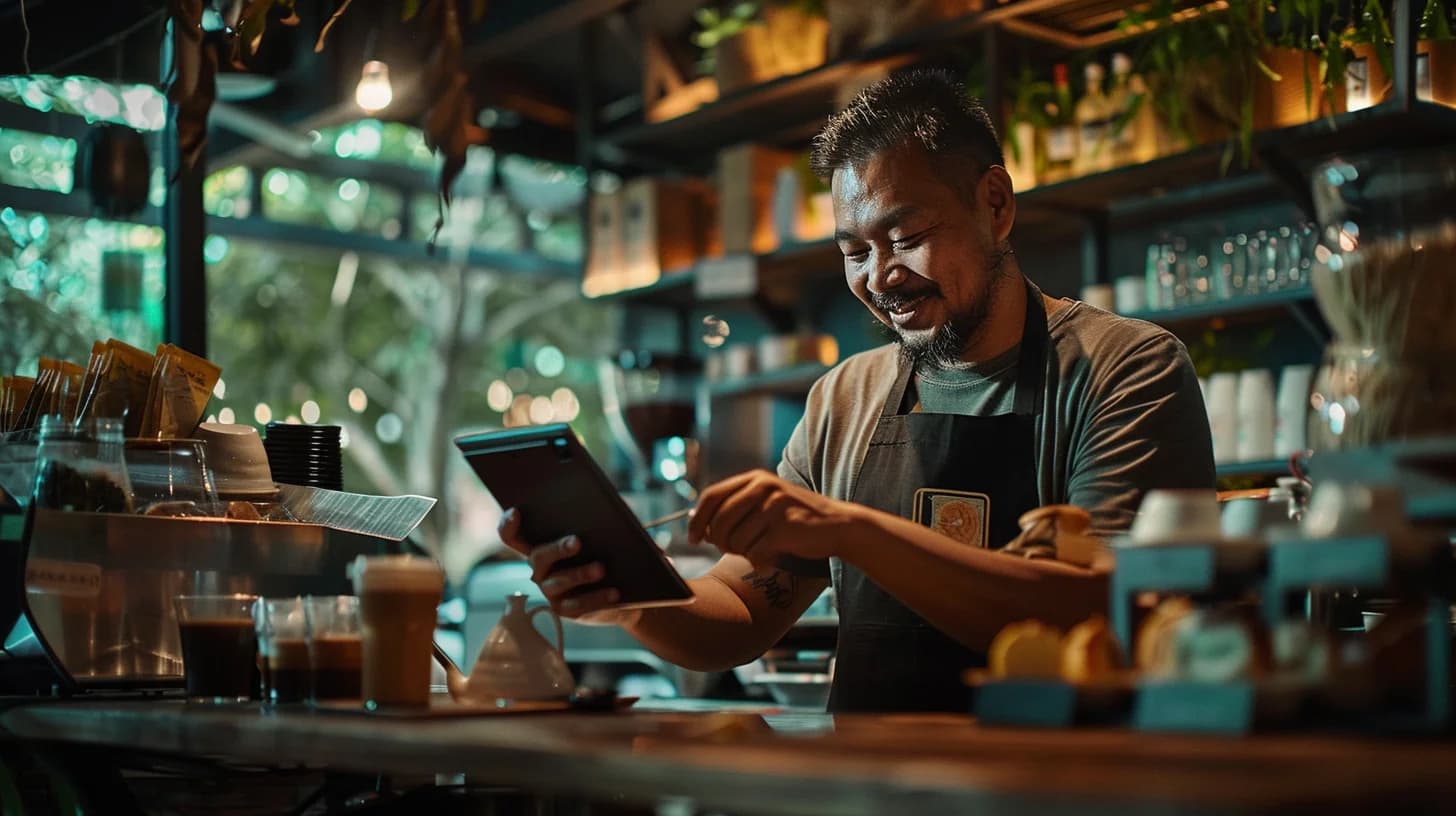
The best F&B POS systems let you accept orders from all platforms on a single tablet, eliminating the need for multiple devices and reducing order mistakes.
2. Filipino Payment Methods
Your POS must support local payment options:
- GCash – Leading e-wallet with millions of users
- Maya – Formerly PayMaya, widely accepted
- Cash – Still dominant in many areas
- Credit/Debit cards – For tourist areas and upscale restaurants
3. Local Regulatory Compliance
Philippine restaurants must comply with BIR requirements for official receipts. Your F&B POS should generate BIR-compliant receipts and maintain digital records for tax purposes.
Top F&B POS Systems in the Philippines
Klikit
Klikit is an all-in-one F&B POS system designed specifically for Asian restaurants. Key features include:
- Free POS software – No monthly fees for the core system
- Multi-platform order aggregation – GrabFood, Foodpanda on one screen
- Menu management – Easy updates across all platforms
- Analytics dashboard – Real-time sales and performance insights
- Payment processing – Support for GCash, Maya, and cards
Best for: Small to medium restaurants, cafes, and cloud kitchens looking for an affordable, comprehensive solution.
TouchPOS
A established player in the Philippine market with hardware-focused solutions.
Pros: Robust hardware, local support team
Cons: Higher upfront costs, limited delivery integration
Oracle Micros
Enterprise-grade solution popular with hotels and large restaurant chains.
Pros: Comprehensive features, global support
Cons: Expensive, complex setup, overkill for small restaurants
Smile! (CukCuk)
Vietnam-origin POS making inroads in the Philippine market.
Pros: User-friendly interface, good for cafes
Cons: Limited delivery platform integration
Comparison Table: F&B POS Philippines
| Feature | Klikit | TouchPOS | Oracle Micros | Smile! |
|---|---|---|---|---|
| Monthly Cost | Free* | ₱3,000+ | ₱10,000+ | ₱2,500+ |
| GrabFood Integration | ✅ | ✅ | ✅ | ⚠️ |
| Foodpanda Integration | ✅ | ⚠️ | ✅ | ⚠️ |
| GCash/Maya | ✅ | ✅ | ✅ | ⚠️ |
| BIR Compliant | ✅ | ✅ | ✅ | ⚠️ |
| Table Management | ✅ | ✅ | ✅ | ✅ |
| Inventory Tracking | ✅ | ✅ | ✅ | ⚠️ |
*Klikit offers free core POS with transaction-based pricing for payments
How to Choose the Right F&B POS for Your Restaurant
Consider these factors before making your decision:
1. Restaurant Type
Quick Service (Fast Food): Prioritize speed and throughput. Look for quick order entry and kitchen display integration.
Casual Dining: Table management and split-bill features are essential.
Cafes: Look for coffee shop-specific features like espresso shot tracking and pastry inventory.
Cloud Kitchen: Multi-brand management and delivery aggregation are critical.
2. Volume Considerations
How many orders do you process daily?
- < 50 orders/day: Basic POS with delivery integration
- 50-200 orders/day: Full-featured POS with inventory management
- 200+ orders/day: Enterprise solution with kitchen display system (KDS)
3. Delivery Dependency
If more than 50% of your orders come from delivery apps, prioritize systems with strong aggregator integration. Managing multiple delivery tablets leads to errors and lost orders.
4. Budget
F&B POS costs include:
- Hardware: Tablet, printer, cash drawer (₱15,000 - ₱50,000)
- Software: Monthly subscription (₱0 - ₱5,000/month)
- Payment processing: 1.5% - 3% per transaction
- Setup/training: Free to ₱10,000
Implementation Tips
- Ask for a live demo – Most providers offer demos. Test with actual orders first.
- Train your staff – Schedule training before going live. Most failures happen from insufficient training.
- Migrate data carefully – Import menu items systematically. Test all items before going live.
- Have a backup plan – Keep a manual order system ready for the first week.
Conclusion
The right F&B POS system can transform your Philippine restaurant operations. For most Filipino restaurant owners, Klikit offers the best balance of features, affordability, and local support.
With free core software, seamless GrabFood and Foodpanda integration, and full payment support including GCash and Maya, Klikit helps restaurants reduce operational costs while increasing order accuracy and customer satisfaction.
Ready to simplify your restaurant operations? Book a demo with Klikit and see how the right F&B POS can grow your business.